TU CTF 2019 Writeups

Finished a couple writeups from the recent TU CTF 2019, which can be found here: https://github.com/h0ffayyy/CTF/blob/master/TU_CTF_2019/Summary.md
Finished a couple writeups from the recent TU CTF 2019, which can be found here: https://github.com/h0ffayyy/CTF/blob/master/TU_CTF_2019/Summary.md
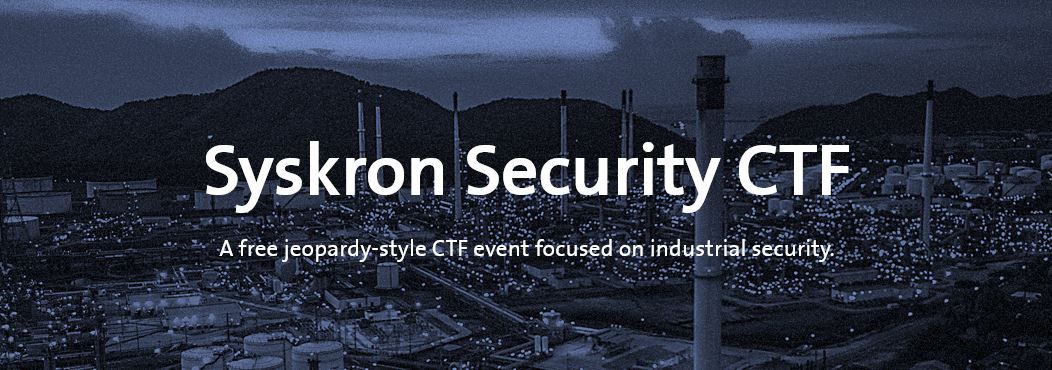
A CTF with an industrial security theme with some neat OSINT challenges.
Checkout my write ups on GitHub!

Over the past couple of weeks, I participated in an Icelandic capture the flag competition, hosted by IceCTF. The challenges ranged from very easy to quite difficult. I managed to solve about a dozen or so challenges, so this post will be quite long.
Description: Go Green! vape_nation.png
For this challenge you were given a .png image (seen below).
Image
To find the flag, I used a nifty program called StegSolve. From there, I played around with some of the analysis options until I found the flag using the “Green plane 0” setting.

Category: Misc(iot and network)
Points: 100
Please analyze this pcap.
Decrypt the downloaded file by the following command.

 $ unzip files21.zip
 $ openssl enc -d -aes-256-cbc -k gcCbBJN5pIHiL8JiJ8Xj -in files21.enc -out files21_ok.zip
 $ unzip files21_ok.zip
After opening the file in wireshark, it seems that we are viewing the history of someone interacting with a machine using telnet. They attempt to login using default credentials like admin/admin, and finally succeed using an account called “reds”. They then start to check things like users on the machine, disk space, and network connectivity. Eventually, we get to some ESP packets that were sent along an encrypted tunnel.

Over the past week, I participated in an online jeopardy-based CTF competition hosted by sCTF. While sCTF is primarily aimed at high school students interested in hacking and infosec, they allowed other competitors to participate for fun. I was surprised at the overall level of difficulty that the challenges offered! Below are a few quick write-ups for the challenges I completed.
This was the first reverse engineering problem. You were given a binary file, called rev1. Running the binary gives you this: